
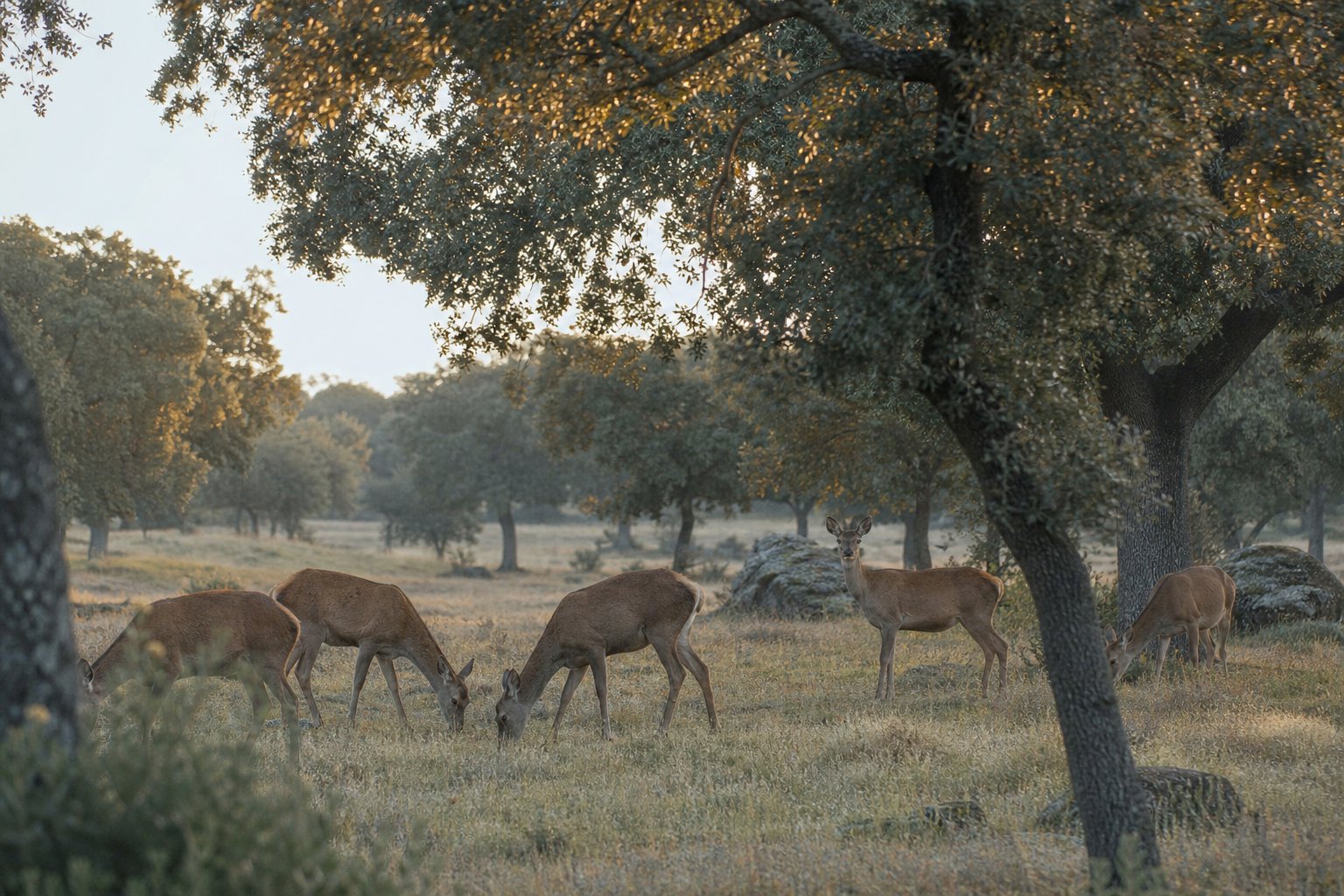
The 2026-2027 hunting season in Castilla-La Mancha has started with significant changes in regional regulations. The most notable change is the increase in quotas, especially for female ungulates, representing a shift in current wildlife management in the region. This measure directly affects hunters and game managers, and above all, shows a greater commitment to population control and sustainability, without overlooking the fundamental role of hunting as a social and economic driver in the community.
What does the quota increase consist of?
According to the new Castilla-La Mancha General Hunting Order, quotas of several species that are overabundant or have a notable impact on the natural environment and agriculture have been significantly increased:
- Fallow deer and red deer: male quota increases by 30% and female quota by 100%.
- Roe deer: juvenile male quota rises by 30% and female quota by 100%.
- Spanish ibex: female quota doubles.
- Wild boar: quotas remain unlimited in reserves; specific control of juveniles and females is now recommended for more effective population reduction.
These figures represent an important change from the traditional balance between sexes hunted, now prioritising the harvesting of females as a way to stabilise or reduce population growth of these species.
Reasons and context of the measure
The commitment of the Ministry of Sustainable Development is mainly motivated by:
- Preventing crop damage: Recent seasons have seen an increase in agricultural damage attributed to ungulates, especially in vineyard, cereal and olive grove areas.
- Forest health: High densities of red deer, fallow deer or Spanish ibex hinder natural regeneration and alter sensitive vegetation structures.
- Sanitary prevention: High densities facilitate the spread of animal diseases, a matter especially monitored in Castilla-La Mancha due to the importance of the extensive livestock sector.
- Technical recommendations: Hunting females, much more effective in the medium term to modulate wild population dynamics, has been advocated by wildlife management and scientific entities.
Impact on hunting activity
The new quotas offer hunters greater opportunities for stalking, hide hunting and driven hunts. Given the higher number of permits for harvesting females and juvenile males, an increase in hunting days and movements in reserves is expected. This could lead to demands for suitable equipment and some specialisation in tracking and approaching animals — especially when locating and selecting females or juvenile specimens.
However, the success of the measure will depend on the commitment of reserve owners, wardens and hunting teams, adjusting quotas to the reality of each estate.
Regulations and licences to consider
Anyone taking part in this activity must hold a valid Castilla-La Mancha hunting licence or the interregional licence issued by participating autonomous communities, thus facilitating hunter mobility. Additionally, reserve permits and tags for big game species remain essential, as does the legal possession and transport of firearms and ammunition in accordance with the Spanish Arms Regulations and the corresponding guides of ownership. In case of doubts about regulation, consult the official website of the Junta de Castilla-La Mancha.
For those wishing to practise stalking of ungulates or participate in driven hunts, note that:
- The Intervención de Armas of the Civil Guard requires rifled firearms (rifles) with a type D licence for big game hunting, and a valid guide of ownership.
- The species, sex and age must match those authorised in the driven hunt or stalking permit and conform to regional regulations on hunting seasons and quotas.
How to prepare: Practical advice
Although the regulatory change is significant in the field, in practical terms, adequate preparation for hunting female ungulates involves:
- Checking permits, documents and licence before the day out.
- Adjusting optical equipment for locating and distinguishing at distance. Good binoculars and quality riflescopes are key.
- Properly preparing the rifle and appropriate ammunition for the species and intended distance.
- Planning the day according to the behaviour and social grouping of females, which is usually different from males.
- Having equipment for extraction and processing of the quarry — for example, suitable cutlery.
Strengthening Castilla-La Mancha’s role in the sector
The region continues to position itself as one of the major hunting areas in the peninsula. With 108,000 licences issued in 2025 and the presence of the interregional licence, the sector expects an active season, especially due to the increased opportunities offered by this quota change. This also translates into a boost to rural tourism and the local economy.
In short, the new framework for big game hunting in Castilla-La Mancha places effective population management and sustainability at the heart of hunting practice. Hunters, now more than ever, are key players in controlling wild populations and protecting the balance between nature and agriculture.